Why Baltimore Row Houses Are So Vulnerable to Rodents (And What to Do About It)
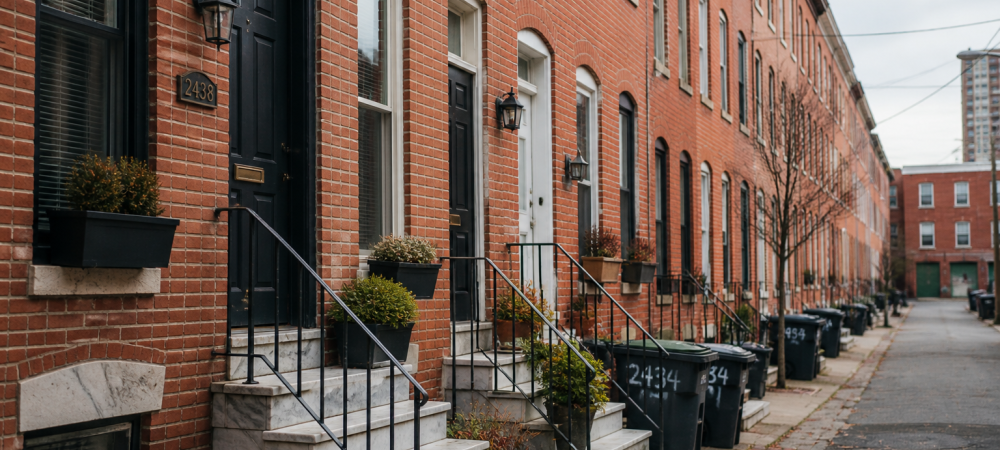
Baltimore row houses share more than a wall with the house next door. Most were built with continuous attics running the length of the block, shared utility chases for plumbing and wiring, and alley-facing kitchens and trash areas that back up to a dozen other homes. A rat or mouse that gets into one unit has a direct path into the next, and the next, without ever crossing open ground.
Why Baltimore rowhomes attract rodents in the first place
Rodents need three things to settle in: food, water, and a place to hide undisturbed. Baltimore's rowhome neighborhoods deliver all three in close range. Alley-facing trash areas put a reliable food source within a few feet of dozens of units at once, and older construction — much of Baltimore's rowhome stock predates modern sealing standards — means foundations, dryer vents, and utility penetrations were never built with rodent exclusion in mind. Add continuous attics and basements that run block to block, and a single food source can support activity across an entire street rather than one house.
This is different from the pressure a detached suburban home deals with. A detached house is its own island: seal it, and the problem is generally solved. A rowhome is one segment of a much longer structure, and the pest pressure on it depends partly on what's happening in units it shares walls with.
The problem with treating just your unit
Sealing your own rowhome doesn't make it rodent-proof if the house attached to it isn't treated too. Because the framing is continuous, a rat colony living undisturbed two doors down can travel the same shared chase or attic run right back into a unit that was sealed and cleared months earlier. This is the mistake most homeowners make: they treat the infestation like it's contained to their address, when the block itself is really the unit that matters. A single untreated rowhome on a strip is often enough to reinfest three or four neighbors within a season.
Rats or mice? How to tell which one you're dealing with
The signs point to different animals, and the treatment approach differs depending on which one is actually present:
- Norway rats leave larger droppings (roughly the size of a raisin), gnaw marks that look coarse and heavy, and tend to nest low — basements, crawl spaces, and foundation gaps.
- House mice leave much smaller, thinner droppings, finer gnaw marks, and nest higher up — wall voids, attic insulation, and cabinet corners.
- Rats need a water source nearby and rarely stray far from it; mice can survive on the moisture in the food they eat, which lets them establish further from an obvious water source.
Getting this distinction right matters because bait placement, trap sizing, and entry-point priorities differ between the two. A generic response to "rodents" without identifying which one wastes a treatment cycle.
This is also where a DIY response tends to lose money rather than save it. A homeowner who buys mouse-sized traps for a rat problem, or vice versa, often goes through an entire round of store-bought products before realizing the mismatch, by which point the population has usually grown. A correct identification at the start is one of the cheapest parts of solving the problem.
What a professional inspection actually looks for
A rowhome-specific inspection goes beyond a walk-through of the kitchen and basement. It maps the points a unit shares with its neighbors: the party-wall attic seam at the roofline, shared dryer vent penetrations, plumbing chases that run between units, and the foundation-to-brick transition along the alley side, which shifts over decades and opens gaps that were never there when the block was built. Each of these is a potential entry point that a single-unit-only inspection would miss entirely, because they only become visible when you're thinking about the block as one connected structure rather than a row of separate houses.
Follow-up monitoring matters just as much as the initial visit. A shared-structure infestation rarely clears in one treatment, since activity can shift from an attic to a basement chase as the initial pressure point gets sealed. A monitoring visit a few weeks out confirms whether the sealing held or whether a secondary entry point needs attention, rather than assuming the job is done the moment the visible activity stops.
What the city handles, and what it doesn't
Baltimore City's Department of Public Works runs the Rat Rubout program through 311, which treats exterior conditions — baiting alleys, inspecting yards, and addressing burrows in public and shared outdoor space. That's genuinely useful for block-wide exterior pressure. What it doesn't cover is the interior structural work: finding and sealing the specific entry points into a rowhome's shared attic or utility chase, and treating the infestation actually living inside the walls. That's the piece a licensed rodent control service handles, and it's the piece that determines whether a rowhome stays rodent-free after the city's exterior work is done.
Warning signs specific to rowhome living
A few signs point specifically to the shared-structure risk rowhomes carry:
- Scratching or movement in a party-wall attic, especially at the roofline where units connect
- Droppings or gnaw marks near shared basement walls or utility penetrations, not just around the kitchen
- New activity appearing shortly after a neighboring unit changes hands or sits vacant during a renovation
- A neighbor mentioning their own rodent problem — treat this as an early warning for your own unit, not just their concern
What actually solves it
A real fix follows a specific order, and skipping a step is usually why an infestation comes back:
- Full structural inspection. Mapping every entry point the unit shares with its neighbors, not just the ones on its own exterior.
- Sealing that accounts for shared framing. Standard single-unit sealing misses chases and attic runs that continue past the property line.
- Treatment matched to the species present. Rat and mouse infestations call for different bait placement and monitoring.
- Coordinated treatment across affected units, when needed. If the infestation clearly extends next door, involving the neighboring unit is usually what makes the fix stick instead of temporary.
Skipping straight to bait or traps without the inspection and sealing steps is why so many rowhome rodent problems come back within a few months — the animals themselves get removed, but the pathway that let them in stays open.
What you can do between professional visits
Professional treatment handles the structural and pest-specific work, but a few habits on the homeowner side make it stick longer. Keep trash and recycling in containers with tight-fitting lids rather than bags alone, since loose trash at alley level is the single easiest food source a rowhome block offers. Clear clutter from basements and attics near party walls, since rodents prefer to nest where they won't be disturbed, and a cluttered space along a shared wall is an easy choice. If you notice a gap opening where a utility line enters the house, get it sealed before it becomes an entry point rather than after activity starts.
Report exterior conditions in the alley itself — overflowing dumpsters, unmaintained vacant lots, standing debris — through the city's 311 system. That's outside what a pest control service can address directly, but it reduces the food and shelter pressure on the whole block, which benefits every rowhome on it.
When a rental or vacant unit is part of the problem
A meaningful share of Baltimore's rowhome stock is rental property, and a vacant or poorly maintained unit next door changes the math on treatment. An empty house with no one checking on it regularly can go undetected as a source for months, even while the units on either side are being actively treated. If you're dealing with recurring activity and suspect it's coming from a neighboring rental, it's worth raising with the property manager or landlord directly — in many cases, they aren't aware there's a problem until a tenant or neighbor flags it. Coordinated treatment works best when everyone with a stake in the block is looped in early, not after the third round of retreatment.
Dealing with rodents in a Baltimore rowhome — or just hearing something in the walls and not sure what it is? Call Atlantic Pest Control at 410-889-2525 and we'll help you figure out what's actually going on next door, not just in your own walls.