Mosquito Control in Dundalk, MD
Spending time outdoors should be enjoyable, but persistent mosquito activity can make even a simple evening on the patio feel impossible. Without a real strategy in place, mosquitoes keep coming back because breeding sites are everywhere, from clogged gutters to forgotten planter saucers to anything holding even a small amount of standing water. A thorough yard and property assessment identifies exactly where adult mosquitoes rest and where eggs are being laid, so treatment goes where it actually matters. Barrier treatments reach into dense foliage and shaded spots that store-bought products simply cannot penetrate. With recurring visits timed to Maryland's active season, Atlantic Pest Control builds a seasonal mosquito control routine that steadily reduces pressure on your property from spring through the first frost.
Here is what our mosquito control services in Dundalk include:
- Free in-person inspection and yard assessment
- Targeted barrier treatment for foliage, decks, and fence lines
- Larvicide application to standing water sources
- Season-long recurring treatment program
Your Family Deserves a Yard Free from Mosquito Worry
Mosquito control in Maryland takes more than a generic spray and a wish. Asian tiger mosquitoes breed in containers as small as a bottle cap, rest deep in shaded foliage during the day, and are confirmed West Nile virus vectors in our region. Mosquito Control that actually works has to be targeted, consistent, and timed to how mosquitoes behave here, not just how they behave on a product label.
Here is how we take care of it, step by step:
- A technician comes out for a free in-person inspection, walking your property to map every breeding zone and shaded resting area specific to your yard.
- We build a written, yard-specific plan based on what we find, covering container breeding sites, fence lines, wood edges, and dense plantings where adults hide during daylight hours.
- We apply EPA-approved barrier treatment directly into the foliage, under decks, and along shaded perimeters, reaching spots store-bought foggers simply cannot penetrate.
- We treat standing water sources like birdbaths, rain barrels, and low spots with larvicide to stop the next generation before it ever takes flight.
- For properties near woods, ponds, or commercial lots with heavy pressure, we offer CO2, heat, and light-attractant traps as an add-on for extra coverage.
- We return on a recurring, season-long schedule timed to the Maryland mosquito calendar, from spring through the first frost, so protection never lapses during peak pressure months.
Why Families in Maryland Trust Atlantic Pest Control for Mosquito Protection
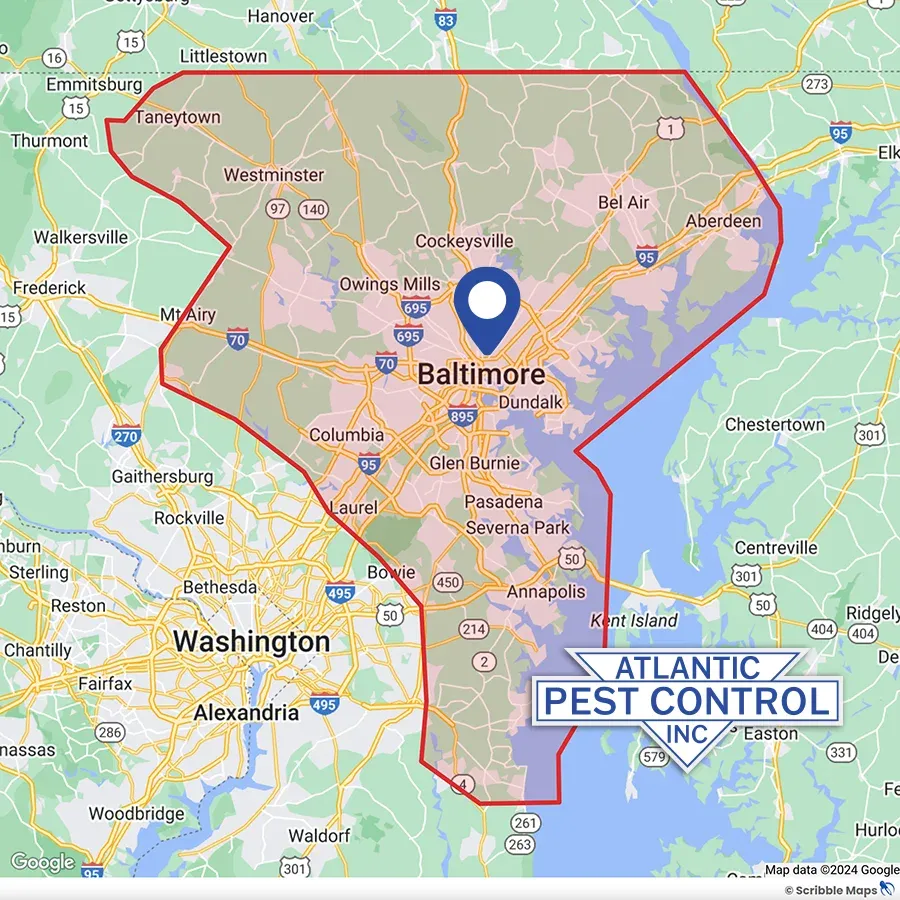
Atlantic Pest Control is a family-owned, locally operated company serving Baltimore, Baltimore County, Harford County, Howard County, Carroll County, and Anne Arundel County. Our technicians live in the same neighborhoods they protect, and that matters when you are dealing with a pest as regionally specific as the Asian tiger mosquito. With a 4.8 Google rating, recognition as Baltimore's Best Pest Control Company by Baltimore Sun readers, and mosquito control bundled into our alongside flea and tick coverage, you get thorough, professional service with no guesswork. Call us today or fill out our free estimate form and we can often get to you the same day.
Your Family Deserves a Reduced-Risk Approach to Mosquito Control
Atlantic Pest Control applies EPA-approved barrier treatments directly into shaded foliage and along fence lines, keeping product away from play areas and pet bowls. Drift reduction practices and right-rate dosing keep exposure low, so your family can get back to enjoying your home in minutes.
Signs Your Yard Has a Mosquito Problem Worth Taking Seriously
Mosquitoes are easy to brush off as a seasonal nuisance, but when bites start happening in broad daylight or your family can't enjoy the backyard without swatting constantly, that's a signal worth paying attention to. The Asian tiger mosquito, which is the dominant species in this region, bites aggressively during the day and rests in dense, shaded vegetation close to where your family spends time outdoors. Knowing what to look for can help you understand the scope of what you're dealing with before it worsens.
Common signs of a mosquito problem in Maryland yards and homes:
- Daytime biting activity, especially in shaded areas like under decks, near fence lines, or in dense shrubs
- Bites that appear on ankles and lower legs, which is a behavioral signature of tiger mosquitoes feeding close to the ground
- Small pools of standing water in forgotten containers such as planter saucers, recycling bins, clogged gutters, or children's toys
- Visible mosquito activity concentrated in cool, humid corners of the yard rather than open sunny spaces
- Black-and-white striped mosquitoes that are noticeably smaller and more aggressive than the species many families are used to seeing
- A sharp increase in mosquito pressure during June through September, which is when regional populations peak
- Bites occurring even after using store-bought repellents or citronella candles outdoors
What makes this particularly concerning for families is that both the Asian tiger mosquito and the Culex pipiens species common to this region are confirmed vectors of West Nile virus, and Eastern equine encephalitis has also been detected in the state. When biting pressure is this consistent, it rarely means one or two mosquitoes found their way in. It usually means there are active breeding sites nearby that keep replenishing the population throughout the season.
The good news is that once you know the signs, you can stop guessing and start getting real answers about what's happening in your yard.
Frequently Asked Questions
Can I do anything to help reduce mosquitoes between treatments?
Yes—removing standing water (like birdbaths, clogged gutters, or unused containers), trimming overgrown shrubs, and keeping your lawn well-maintained all help reduce mosquito breeding areas.
Do I need to be home during treatment?
No, our technicians can treat your property while you're away. We'll coordinate timing that works for your schedule.
How long before I can use my yard after treatment?
Re-entry times vary by product type and your specific landscape. We'll provide specific guidance based on the treatment used - typically it's safe once surfaces are dry, but we'll give you exact timing.
How soon can I expect to see results?
Many customers notice a significant drop in mosquito activity within 24–48 hours after the first treatment. Consistent service helps maintain control all season long.
What about my vegetable garden?
We take special care around edible plants and can adjust our treatment plan or use food-safe products to protect your garden areas.
What attracts mosquitoes to my yard?
Mosquitoes are drawn to certain conditions around your yard that provide both breeding grounds and sources of attraction. Here’s what brings them in:
- Standing Water: Mosquitoes need standing water to lay their eggs. This could be in anything that holds water, like birdbaths, clogged gutters, flower pots, tire swings, or even puddles. It’s important to check for and eliminate standing water regularly.
- Overgrown Vegetation: Thick shrubs, tall grass, and dense foliage provide shelter for mosquitoes, giving them a cool, humid environment to rest in during the day. Mosquitoes are most active during dawn and dusk but will seek out hiding spots during hotter parts of the day.
- Shaded Areas: Mosquitoes love shade, especially during hot weather. Areas of your yard that don’t get much sunlight—like under trees, around tall bushes, or near structures—are prime spots for mosquitoes to hide out during the day.
- Organic Matter and Decaying Plants: Mosquitoes are attracted to decaying plant material where they can find moisture and nutrients. If you have compost piles or dense plant debris in your yard, this can draw mosquitoes.
- Excessive Moisture: If your yard is constantly damp due to poor drainage or overwatering, this can create the perfect environment for mosquitoes to thrive. Puddles or even wet soil from frequent irrigation can become breeding grounds.
- Certain Plants: While some plants (like citronella) are known to repel mosquitoes, others—like marigolds, jasmine, and lavender—can attract them due to their fragrance. Consider where you plant these in your yard.
What if it rains after treatment?
Light rain won't affect the treatment once it's dried. However, heavy rain may require rescheduling to ensure effectiveness.
Will mosquito treatment get rid of all mosquitoes?
No treatment can eliminate 100% of mosquitoes, but our program dramatically reduces their population and activity around your home, making your outdoor spaces much more enjoyable.
Will this work for my pool area?
Pool areas are common mosquito breeding spots. Yes, professional treatments are much more effective in these areas than DIY solutions, which typically only last 1-2 days.
Will you kill beneficial insects too?
This is a valid concern. While some treatments can impact beneficial insects, we offer eco-friendly options that minimize harm to pollinators and other beneficial species.